By Dr. Russ and Julieta Stack, LPGA Member….
Your last time out on the course you played great. If it hadn’t been for that triple bogie on the back side, it would have been a personal best round on your home course. You were anxious to get out there again with all that new found confidence and optimism. Then you shot your worst score in months. How the heck did that happen?
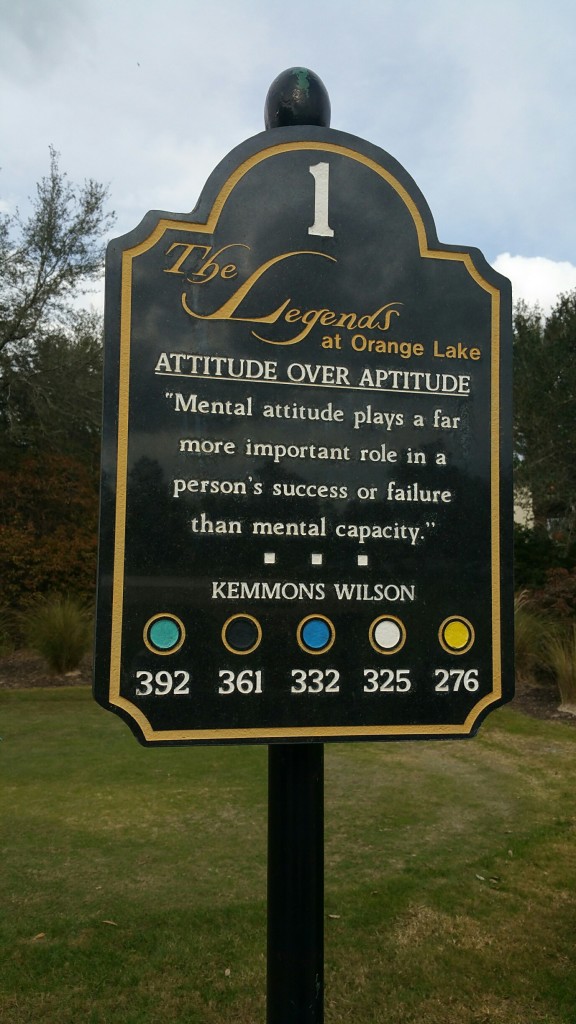
It’s all about expectations. Even the pros have a difficult time after a win or a great round. Setting your expectations too high can actually have a negative effect on your game. It’s as though somehow the bar has been raised after a good round and, at the very least, that can put more pressure on you and your game then would otherwise be the case. More to the point, when you find that you aren’t able to meet the expectation you now have for your game after having played great the last time, frustration, disappointment and tension set in, none of which help your score.
Much has been written about the effect of high expectations on golf performance and about how to prevent that from being a problem. No one recommends that you go out there expecting to play badly to prevent high expectations from getting the better of you. After all, self-confidence on the course is one of the biggest mental game keys to good performance, and staying optimistic is an important part of being resilient during a round. But the conventional wisdom is that you do need to manage your on course expectations to optimize your performance. Generally, that means keeping expectations for your game realistic. No one–not even the pros–plays at the very top of their game all the time. An analysis of some pros’ scores over the course of a season show that an individual’s best and worst scores can vary by as much as 15 to 20 shots. So expecting to play your best all the time is a very unrealistic expectation that will almost assure you don’t play well.
Managing expectations definitely involves keeping them realistic, but that’s only part of it. Another important part of managing expectations is about managing your reactions to unmet expectations. In other words, its not such a bad thing to expect to play well anytime you play, as long as you don’t let frustration, anger and disappointment disrupt your game. Unless you happen to be playing in a tournament, a simple reframe during a less than stellar round to focus on the fun and enjoyment that a round of golf offers (Even a bad day on the golf course is usually better than a day of work!) can help your frame of mind , and it may even help you to play better on the remaining holes.
Learning how to manage your expectations and reactions to disappointed expectations can be a big help off the course as well. Managing expectations in the workplace–knowing what is reasonable to expect from coworkers or what is achievable with regard to project goal setting, for example–are important skills to have, especially if you are in a management or leadership position. Expecting too little leads to stagnation; expecting too much leads to frustration, disappointment and can even result in a dysfunctional team in the workplace.
Another particular issue about expectations that can occur in the workplace is related to generational differences. For example, baby boomers generally expect success to take time and hard work. Millennials, on the other hand, are more inclined to expect results–including their own career success–to occur rather quickly. Continuing frustration in the workplace can lead to ‘burnout”. In fact, some studies have found that millenial women in particular are more prone to burnout from frustrated career expectations. Figuring out how to deal with these differing sets of expectations may be key to having a successful multigenerational office or workforce.
Managing expectations is also often important to successful relationships, whether that be professional relationships or personal relationships. It is a commonly held understanding by those who do couples counseling that the failure to manage expectations in relationships leads to difficulties, conflict and upset. In fact. there are those who go so far as to point out that when a person is angry and frustrated without an immediately identifiable cause, those emotions may actually be red flags for underlying unmet expectations. And the solution is not necessarily lowering your expectations. Rather, understanding your expectations and having the ability to learn something from them and interpret negative outcomes in a more useful and positive way is the more effective strategy.
Take a look at your expectations on and off the course. Are they realistic? Unrealistic? How do you manage your feelings when what you are expecting doesn’t pan out? Are you able to reframe things in a more optimistic light or are you prone to a more “learned helplessness” type of response?
Let us know your thoughts.
